
.214
“A soul, a family, and a batting average.”

The Bargain
Every town has one: the parent who wants it more than the kid. They’re easy to spot—polished SUV in the lot, folding chairs in the dining room, a story about how it “should’ve been them.” My father was that parent. He had a genius for the wrong kind of deal, and he made them with conviction.
The house was big but empty, a McMansion with vaulted ceilings that magnified the hollowness. The dining room had folding chairs, the living room one sagging sofa. He leased an Escalade, polished it like a trophy, while bank notices stacked in the kitchen drawer. He joined a gym but never visited, wore the free t-shirt as if it proved something. Every evening, bourbon at sundown—because that, he claimed, showed control.
And then there was baseball.
The story of his own career was rehearsed to the point of liturgy: a weak elbow, a coach with a grudge, varsity stolen from him by fate. He pressed it into me like an heirloom. His dream wasn’t dead; it waited to be replayed.
The payments came steady. Two hundred for a guru with an iPad. Five hundred for a weekend clinic in a town whose only landmark was a gas station Subway. Thousands for travel teams no one watched. I showed up. I hit .214. My head was already elsewhere—drums, Fortnite, anywhere but the field. The worst part wasn’t playing badly—it was knowing he cared more than I ever could, and having to pretend I didn’t notice.
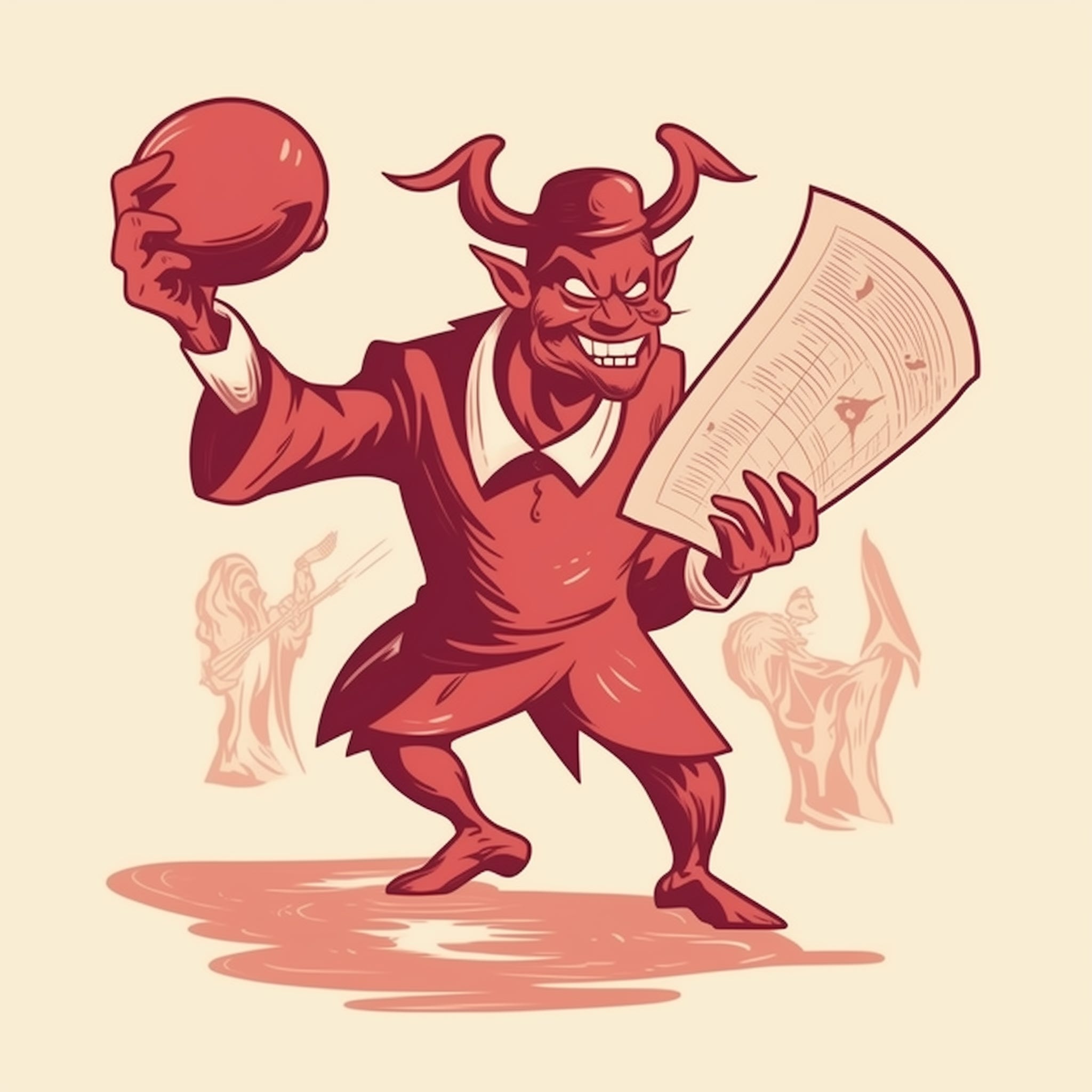
The Devil didn’t need horns. He came in a binder at a Holiday Inn, the room thick with scorched chicken fingers under heat lamps. My father skimmed, nodded, signed before the ink had dried.
The clauses read as follows:
Clause 4: Eternal soul forfeited, effective immediately.
Clause 7: Daughter’s admission to medical school permanently revoked; alternate futures redirected to dentistry.
Clause 9: Wife’s cancer remission rescinded; recurrence timed to coincide with district playoffs.
Clause 12: Community reputation adjusted: family to be known in perpetuity as “that baseball family,” pitied at barbecues, whispered about in parking lots.
Clause 14: Family dog assigned chronic limp, symbolic of team spirit.
Clause 16: All household appliances scheduled to fail exclusively during tournament weekends.
Clause 18: Three generations of accumulated family luck liquidated and reallocated to opposing shortstops.
Clause 20: All booster-club plaques to bear Client’s name misspelled.
All this, for a roster spot on a team I didn’t want to play for.
By May, I was still batting .214. By June, I quit. I wanted drums. I wanted my headset. Baseball was his bargain, not mine.
He stayed in the bleachers anyway—shouting at kids who weren’t me, the Escalade payment late, folding chairs still in the dining room, his soul already gone.
The Devil didn’t gloat. He never has to. Parents like mine keep him in business.
Sad but true. Well-written.